
Pay dirt: One man’s gift of thanks
Editor’s note: The Salvation Army donor in this story has chosen not to disclose his name or that of his wife, or their exact location, in an effort to maintain privacy. The name John Allen is an alias.
The story behind John Allen’s wealth began when he inherited 400 acres of North Dakota land in 2001. The land was part of 1,200 acres that belonged to his stepfather, a lifelong farmer and rodeo cowboy who died in the 1970s.
His stepfather’s will stated that when John’s biological mother died, the land would be split between John and his two half-sisters. His half-sisters’ tracts ended up being lush and fertile, suitable for growing crops and raising cattle. John’s parcel was rocky, sterile and seemingly worthless.
When new technology in drilling turned John’s once-useless land into valuable property, and after the first six-figure check was cashed, John began to make a list of every organization that had ever helped him. He wanted to give back. The Salvation Army was at the top of his list. This is the story of how The Salvation Army helped John, and the incredible things he’s doing in return.
Homeless on The Range
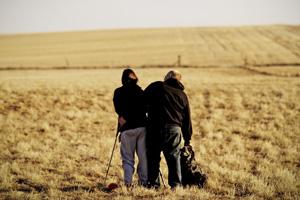 John first encountered The Salvation Army in 1979. He had lived through a crazy decade, beginning with his return to America after spending 18 months as a body counter in the Vietnam War.
“I’d been ankle-deep in American blood,” said John, who struggled with drugs and alcohol but is sober now. “That stuff doesn’t go away. I got drunk and stoned out of my mind just so I could sleep.”
After returning from the war, John spent several years in Florida working as a police officer. He moved back to North Dakota in the mid-1970s and married his first wife. Sadly, she developed schizophrenia and was institutionalized. He had no choice but to move on.
Several years later, while working at a North Dakota landfill, John’s leg was crushed in a heavy equipment accident. After spending over a year in rehab, he couldn’t find a new job. Eventually, he hitchhiked 200 miles to the big city – Bismarck – to find work.
When John arrived, he spent a week living in what he describes as a hobo camp. He constructed a home with a cardboard box, tarp and sheet of plastic. At one point, somebody told him about The Salvation Army.
“I stopped by The Salvation Army and they gave me a job as a rag-picker when nobody else would hire me,” John said. “They also gave me a place to sleep and a small stipend.”
The Salvation Army’s help got John on his feet. He soon found local work as a delivery driver. Two years later, he moved to St. Louis, Mo., to work in the control center of the Missouri State Penitentiary.
Homeless Again, Helped Again
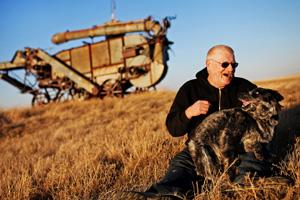 In the mid-1980s, after several years of working at the prison, John was attacked by an inmate during a prison riot. “The guy had martial arts training and shattered my lumbar region,” John said. “I was partially paralyzed from the waist down.”
Once again, he was injured and unable to work. He moved back to northwest North Dakota and lived, for a spell, off backlogged overtime pay he’d accumulated at the prison. When the money ran out, his body had healed enough that he could work again. With no local jobs available, he dusted off his thumb for another hitchhiking journey – this time to Fargo, 300 miles away.
John hobbled into town on legs that could barely carry him. With no money, he was in need of serious help. This time he knew right where to go.
“The Salvation Army got me fed,” he said. “At that time they had a clinic in town. I was in really bad pain from having my lower body reconstructed, and they got me the meds I needed. They also got me to a dentist and paid $200 to get me some dentures.”
After John stabilized, he enrolled in college and became a computer repair specialist. He’d spend the next 10-plus years in Fargo working on computers. After that, he moved
to Minot to work in the oilfields.
By 2005, John was married to his current wife, whom he met near Minot. They decided to move away and start a new life. They settled in the small logging community of Vernonia, Ore., where she sold paintings and John worked in video editing. Two years later, they lost everything in a December 2007 flood that destroyed most of the town, including the trailer they were living in.
During the flood, they set aside their personal loss and resolved to help others in the community. At one point, they literally saved a mentally disabled woman from drowning. Exhausted, they later headed to the local flood emergency center.
“There was The Salvation Army,” John said. “They were giving out cookies, doughnuts and water. We were so dehydrated. “The Salvation Army had really impressed me before that, too, when I’d fought some floods in North Dakota – two in Whapeton and one in Fargo. The Salvation Army was right there beside us.”
With little money, John and his wife drove back to North Dakota to start over. Soon, money would never be a problem again.
Hitting Pay Dirt
A few days before Thanksgiving 2011, John suffered a heart attack and almost died. He nearly had a second one when he came home from the hospital and opened his mailbox.
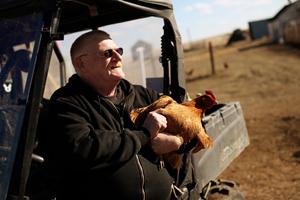
“There were two checks that totaled more than $100,000,” John said. “I almost didn’t live to see it. You know it’s God because you can’t come up with that kind of irony.”
Back in 2008, an oil company had already given John payment for exploration rights to his 400 acres. At last, the company had found what it was looking for. From that Thanksgiving forward, John and his wife have been collecting monthly checks of between $14,000 and $40,000. They’re currently living on a small ranch in the middle of nowhere, but have plans to move west and build a house on the ocean.
Their plans also include giving a lot of money to The Salvation Army. John is working with The Salvation Army’s Planned Giving team to set up a fund that will provide $10,000 per year for Salvation Army disaster relief in four North Dakota counties. The fund will live for as long as he and his wife do. He also plans to leave The Salvation Army 10 percent of his entire net worth once he and his wife are gone. That number could be staggering, given that drilling should continue on his land for the next 30 or 40 years.
“I’m setting up those who touched my life,” John said. “The Salvation Army, they never judged me. It was just, ‘You’re hungry and you need a place to sleep. Here you go.’ I won’t ever forget that.”
Read more stories, blog posts and testimonials on our News page.