
Celebrating the Women of The Salvation Army
Many organizations today have strong female leadership & staff, but few can say this was the case historically as women have had to come together and work hard to receive proper representation, equality and opportunities. The Salvation Army is proud to be an organization built upon the services of many dedicated, brave & intelligent women throughout our history. This has continued over the years and can be seen today as we always work in new ways to champion the female voices within The Salvation Army. We are home to Women’s Ministries and Fellowship programs, chapters of the Women’s Auxiliary and right here in the Heartland Division we are currently led by our Divisional Commander: Major Kelly Collins. The Salvation Army’s mission is without discrimination and that includes gender. Every woman is welcome here and many of our organizations greatest successes have come directly from their tireless efforts!
For Women’s History Month we would like to highlight some of the most notable female Salvationists in our history as a way to recognize and thank all of the women, past and present that bring our mission to life.
CATHERINE BOOTH
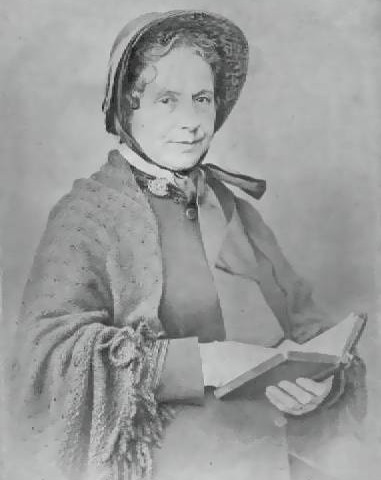
Catherine Booth was the co-founder of The Salvation Army with her husband William Booth. Together they created the organization to serve those in need who were forgotten by society. Catherine advocated for a woman’s right to preach, writing Female Ministry, which argued for a woman’s right to share the gospel, using Bible passages that supported equality. She is also well regarded for her commitment to social reform – most notably fighting for better working conditions and pay for women. She is affectionately known by Salvationists as “The Army Mother.”
EVANGELINE BOOTH
Evangeline Booth was the seventh of eight children born to General William Booth and his wife, Catherine. She grew up in The Salvation Army, helping her parents spread the mission of the Army. Booth was so strong that she was often sent wherever there was opposition to The Salvation Army or their work was threatened. Her father, General Booth, was often quoted as saying “Send Eva!”
During the aftermath of the 1906 San Francisco earthquake, Evangeline led a mass open-air meeting in New York’s Union Square, where she raised more than $12,000 to support relief workers. She also committed hundreds of volunteers to support first responders and survivors in the wake of the earthquake.
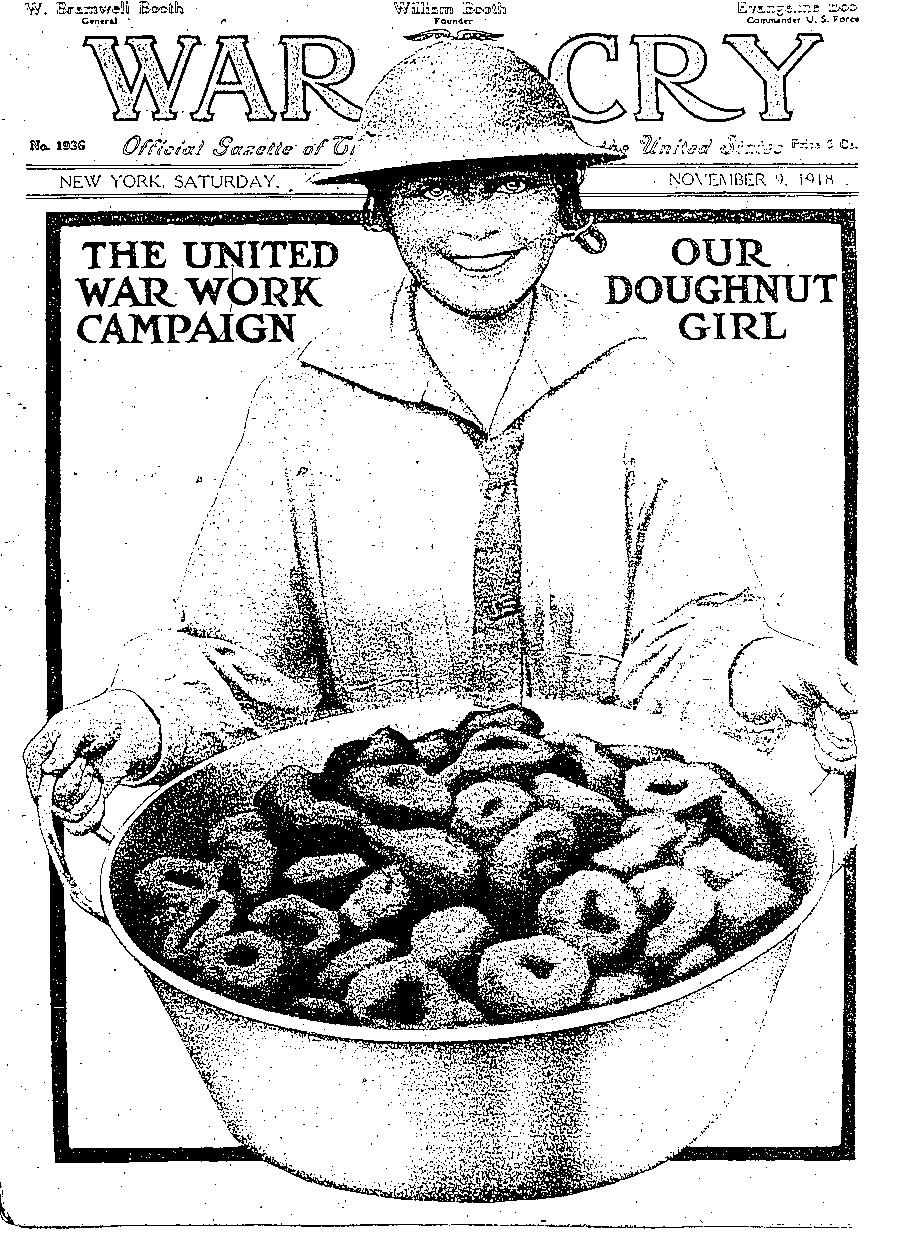
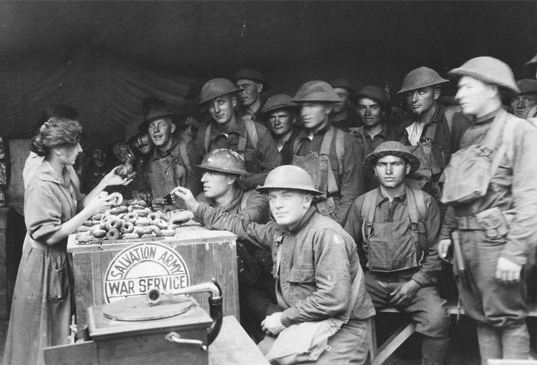
In 1917, Evangeline sent 250 Salvation Army volunteers to France’s front lines during World War I to provide comfort and aid to soldiers. The volunteers started frying pastry dough in soldiers’ helmets and distributing doughnuts. Hence, the famous Doughnut Lassies were born.
In 1934, Evangeline was elected General by the High Council; becoming the first woman to lead the international organization. Under her leadership, The Salvation Army expanded its services, establishing hospitals for unwed mothers, soup kitchens, emergency shelters, and homes for aging adults.
THE DONUT LASSIES
In the midst of WWI, Evangeline Booth sent 250 Salvation Army volunteers overseas to support the US soldiers fighting in France. There, they set up small huts located near the front lines to give soldiers clothes, supplies and baked goods. The Donut Lassies began frying donuts in soldiers’ helmets. The tasty treats boosted morale and won the hearts of the soldiers. In addition to serving fresh-fried pastries, Donut Lassies provided spiritual aid and comfort. They were a link home to family and friends. Their work on the front lines was rekindled during World War II. Today, the Army honors the Donut Lassies efforts by celebrating Donut Days annually in June.
ELIZA SHIRLEY

Eliza Shirley pioneered the establishment of The Salvation Army in the United States. Born in England, she dedicated herself to The Salvation Army at 16 years of age. The following year, her father informed her they were moving to Philadelphia, Pennsylvania. So Eliza approached General William Booth for his endorsement and guidance to share the Army’s message across the ocean. He warned Eliza that new faiths were often unwelcome and to prepare herself for a tough journey.
Upon arrival in Philadelphia in 1879, Eliza and her family’s efforts to start The Salvation Army in the US were mostly met with anger and disdain. Crowds often threw mud, stones, vegetables and more. Their first meeting was with only 12 people; and about a month afterward, the lot where they held their meeting was on fire. The flames drew a large crowd, and Eliza bravely embraced the opportunity to sing and preach.
Soon Eliza found a new meeting place and the work of The Salvation Army in the United States began. By the following year, she sent word to General Booth back in England requesting additional support. In response, General Booth dispatched Commissioner George Scott Railton with seven women officers (the Hallelujah Lassies). Within three years, the demand for The Salvation Army had grown so that the group were sent to open additional corps community centers.
MABEL BROOME
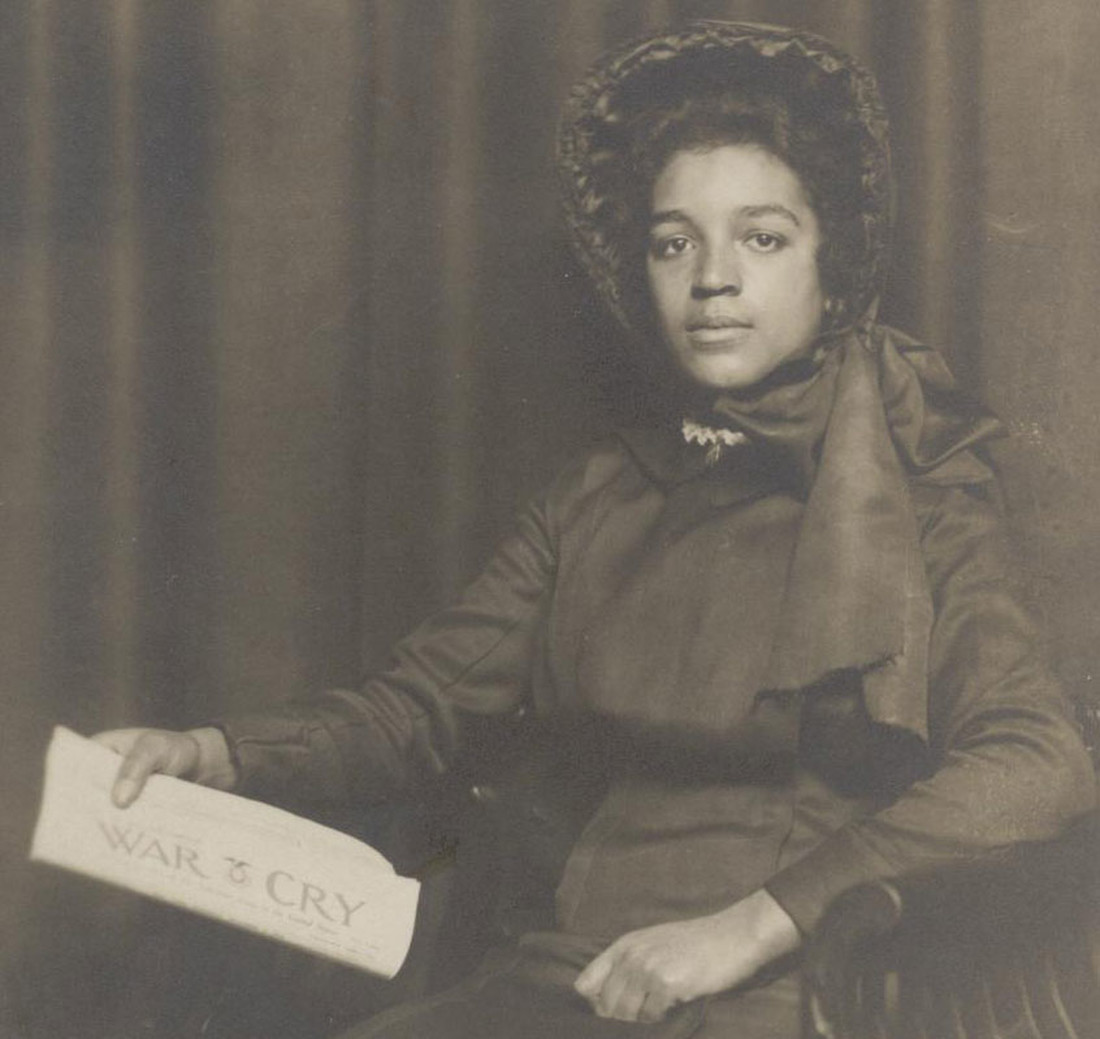
In 1915 in Chicago, Mabel Broome became the first African American to become an officer in The Salvation Army. She led the charge to break the color line and reinforced the Army’s commitment to give leadership roles to women. Broome was one of the first “slum sisters” – female officers who went into a city’s poorest neighborhoods and attended to people’s most basic needs. Read more of her story here.
As we look back on these strong female icons of The Salvation Army, we pray that their inspiration brings new women into our mission and they continue making impacts that shape and guide our future. Whether it is as an officer, volunteer, or staff member – women have proven to be some of the greatest at Doing The Most Good for those in need.