The History of National Donut Day

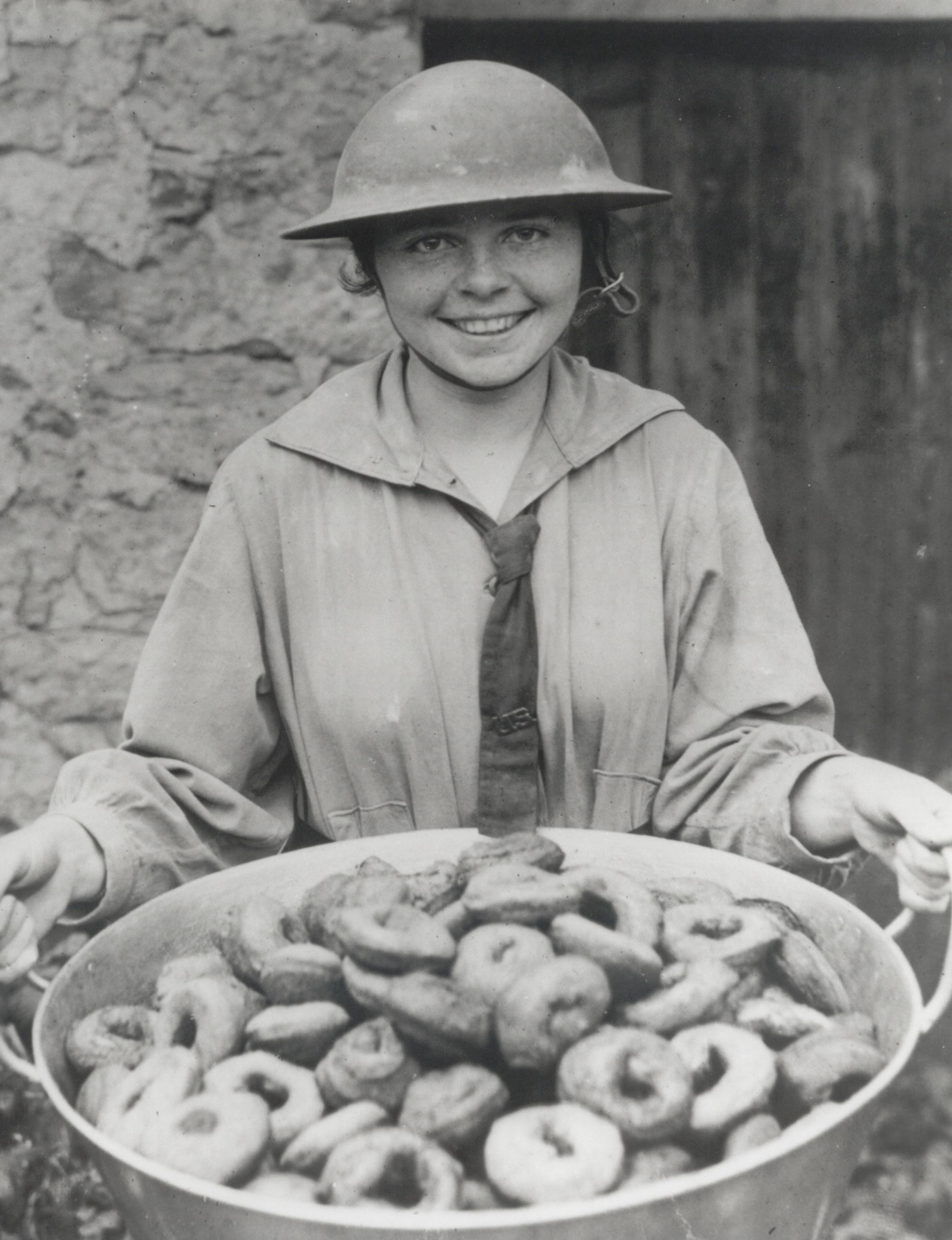
National Donut Day started in 1938 in Chicago to honor of The Salvation Army “Doughnut Girls.” This unofficial holiday is celebrated on the first Friday in June.
In 1917, The Salvation Army began a mission to provide spiritual and emotional support for U.S. soldiers fighting in France during World War I. About 250 volunteers traveled overseas and set up small huts located near the front lines where they could give soldiers clothes, supplies and, of course, baked goods.

After discovering that serving baked goods would be difficult considering the conditions of the huts and the limited rations, two volunteers – Ensign Margaret Sheldon and Adjutant Helen Purviance – began frying donuts in soldiers’ helmets. These tasty treats boosted morale and won the hearts of many soldiers.
Nicknamed “Donut Lassies,” the women who served donuts to troops are often credited with popularizing the donut in the United States when the troops (nicknamed “doughboys”) returned home from war.
During World War I, Donut Lassies served coffee and donuts to soldiers in the trenches. Rations were poor so the donut idea was conceived as a means of bringing the soldiers cheer. Donuts were not the reason Salvation Army workers were in the fighting zones of France; they were there primarily to give spiritual aid and comfort to the American soldier and his allies. They were there to be a link with home and family. The Salvation Army continued to provide comfort, care, and donuts to American soldiers during World War II.